News & Updates

October 28-30, 2026
Montreal, QC
Reimagining Anti-Trafficking: Advancing More Effective, Community-Led Responses.
GAATW Canada brings together anti-trafficking, Indigenous, migrant worker, gender-based violence, and sex worker organizations and people with lived experience to share knowledge, challenge existing approaches, and advance community-led systems change for more effective responses to violence, exploitation, and trafficking in Canada.
October 15, 2026
Virtual
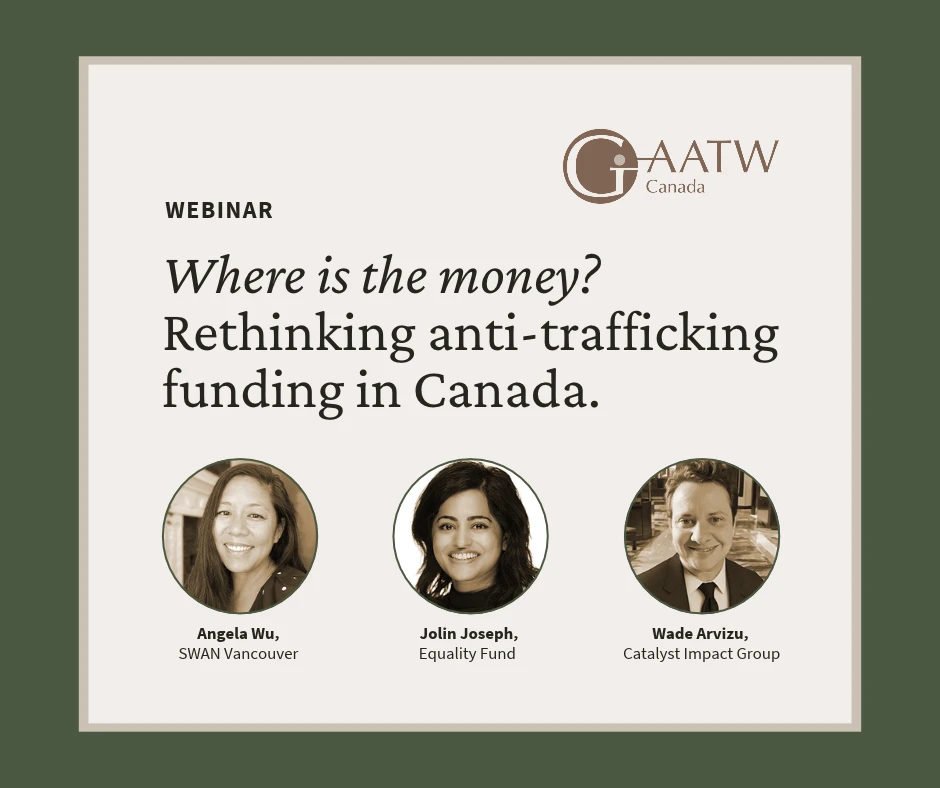
GAATW Canada hosts a webinar that takes a critical look at how anti-trafficking funding in Canada is distributed, asking the tough questions and inviting conversation about how we can address exploitation and trafficking while better serving communities at risk.

June 23, 2026
Virtual
GAATW Canada hosts a webinar about inter-related and overlapping terms used in anti-violence, -exploitation, and -trafficking work. Guest speakers clarify the various terms used to describe exploitation, their historical and political context, and whether, when, and why it is important to use precise definitions, along with examples of how these terms apply in practice in Canada and elsewhere.
Click here to view the webinar recording.

May 15, 2026
Vancouver, BC
GAATW Canada researches claims of human trafficking related to the FIFA World Cup, assesses whether the evidence supports these claims, and examines how anti-trafficking responses were developed in relation to the event.

May 13, 2026
Virtual
For Victim Week 2026, GAATW Canada hosts a webinar with Indigenous partners, Red Response and Standing Together, for a conversation about the importance of relational, culturally-grounded community work to prevent and respond to violence, exploitation, and trafficking.

march 26, 2026
Virtual
GAATW Canada completes a three-year research project, ‘Is it trafficking?’ Examining gender-based violence among women who do informal, precarious, non-standard work in Western Canada.
Download the full report PDF here or the two-page summary PDF here. You can also watch our webinar replay here.

march 23, 2026
Virtual
GAATW Canada launches its "There's a Better Way" campaign, which encourages people to rethink popular anti-trafficking campaigns that are not meeting victims' and survivors' needs.
Read GAATW Canada's guest blog entry about this experience.

MARCH 9-11, 2026
Vancouver, BC
Reimagining Anti-Trafficking: Advancing More Effective, Community-Led Alternatives.
GAATW Canada hosts a national meeting, which brings together trafficking survivors and individuals from organizations serving Indigenous, migrant worker, and sex worker communities, to strategize systems change leading to more effective ways to address violence, exploitation, and trafficking in Canada.

October 15-16, 2025
Winnipeg, MB
Shared Struggles, Collective Action: Bridging Movements for Change: GAATW Canada hosts a national meeting, which brings together Indigenous women, migrant workers, sex workers, trafficking survivors, 2SLGBTQIA+ and gender-diverse people, and allies leading efforts to address violence, exploitation, and trafficking in Canada.

August 30, 2023
Vancouver, BC
GAATW Canada meets UN Special Rapporteur on contemporary forms of slavery, Tomoya Obokata, to discuss labour issues and government legislation and policy that warrant the Special Rapporteur’s attention.
The meeting is part of the Special Rapporteur’s official country visit to Canada, from August 23 to September 6.
We are pleased that many of the issues we raised in our brief are reflected in the Special Rapporteur’s final report.